Showing posts with label history. Show all posts

Monday, November 7, 2011

Fur.....the difference between vintage and retro.

With fur being the big thing this winter and all the rage, it is essential that you know how to indentify the real thing when you come across it. Generally the rule about vintage is if it has reached the grand old age of thirty years then it is considered a vintage item. Although nowadays some people will class things from several years ago as vintage - it's not, it's retro. It's also retro if it's trying to look vintage.

1. One of the first things you need to do is identify the species of fur you are looking at. This will give you a clue as to how old the item is, as we all know and rightly so some species are endangered because of their fur culling and hunting ethics and so cannot be now used to make friviolus fashion items. This is commendable and totally the right way to go about things for the future and generations to come. However this doesn't solve what to do with all those old vintage furs that are still out there. Do they get burnt and wasted or used and appreciated? Everyone has their own opinion on this, and no one is right or wrong - it's still a matter of hot debate between the best of friends.
Ok, some furs went in trends some were always elitest. You can as a rule of thumb tell a real fur from a faux fur by it's feel. This is something you have to do for yourself with practice. You have to stroke real fur and faux to get to know the difference. It's not that hard once you've been stroking a few coats believe me. The oils in the real fur are still there and it will feel soft, silky and luxurious. The faux fur, although getting better still doesn't have that absolute snuggle me and love me forever feel to it yet. Nearly but not quite.
To add with a little help - there is also a smell. Real fur will have at some point in it's life have been looked after and introduced to moth balls. They leave a soft lingering smell in the lining. Sniff around the pockets and neckline where they would have been stored or hung.

2. Look for a label. Sounds easy enough. But real fur is still sold, so you have to know which stores still sell furs. Chances are that you will come across an old label that you've never heard of before. This could mean that it's from an old store - as they change their names over the years. Knowledge of this and from the era of coat you are sourcing helps. Gen up on what it is you are looking for if it is a specific make, style or era. Knowledge is power.
Also look for initals sewn in. Often furs were made to order in select fashion houses. Remember years ago only the rich could afford real fur. Usually the woman had her initals sewn in as part of the service.
Also if the label says wash at such and such degrees - it's faux. Real fur should never be washed only dry cleaned at a specialists.

3. Know your eras and their styles. Look and research a certain era of coat. 1970's and 1960's furs will be a totally different cut to a 1930's 1940's coat. For example in the 1950's the coats were often shorter sleeved, called a bracelet cut - so the lady could show off her diamonds as well just for that extra money sniffing effect. In the 1940's coats tended to be more long sleeved. It all depends on what you are looking for. The answer here is research, research, research!

4. Look for sand. Evidence of sand tells you it is old straight away. Feel the weight. A real fur naturally will be slightly heavier than a faux fur due to the hide. Especially if it is vintage. Years ago in some they used to place sand in the lining of the coat to help combat damp and weight it's hang. It's also to do with the process of the furrier.

5. Look at the fur in a good light. Seems obvious right, but faux fur is manufactured. It will be perfect and often a repeat pattern. Think about it - it's a mass produced product right. Real fur like us is made with imperfections. Patterns and colouring will be random. Simples.
If you want to take a magnifying glass along and look at the individual hairs. A faux fur will have the same couration all the way along on each one, a real fur will be individual. Try it and see.

6. If in doubt, here's one my Granny taught me. Take a pin with you, get a single hair folicule and pierce it with the pin. I'm serious. If the pin passes through easily it's fake, if it resists and is difficult it's real.
Another one is if they allow you to, you can ask to snip a very small piece of the fur from under the collar, on the inside or once you have purchased it, if you love the coat for itself. Hold the snipped fur to a naked flame in a pair of tweezers. The faux fur is made from synthetic plastic it will smoulder, then burn with a chemical smell. Real fur will smell like your own hair when it get's caught in the hairdryer and create a clumped smouldering ball. Please though, remember to do this test away from the rest of the fur item so it doesn't all go up in flames!!

7. Remember real fur will be attached to a hide, faux fur won't. Check the lining of the coat if in doubt. Also if it has a head and a tail, feet even - more than likely it's a real pelt.

Fur - The BIG Debate.

I am a vegetarian. I love animals. Goes without saying. I did not choose however to become a vegetarian, I was born this way and then raised as one. I am allergic to the fats and protein in meat. They make me sick, literally.
Now, I don't like touching meat full stop, which I think those who you who know me will I'm sure of heard me mention before. Can't stand it. Reminds me a a corpse on a slab and I don't like it. Yet I still cook and prepare meat for those I love every week. It is their choice to eat meat not mine.
Simone D'alliencourt. Loius Vuitton pic by Henry Clarke 1930's.
Okay.........fur. It is the bi-product of the meat production, both for animals (cat and dog food) and humans. Leather is a bi-product of the beef dishes and burgers fast food joints and rabbit fur is the bi-product of all the tins of pet food consummed in their billions every week. An where do you think the fleece of the lamb or mutton goes after it's been killed? Into any kind of wool product industry they can sell it to of course.
There are some furs that I won't wear though, I absolutely don't agree with killing an animal for it's fur coat alone, like cute baby seals, foxes, minks, leopards, bear, tigers etc - but I do wear leather and wool. I love leather coats, bags and shoes. I love knitted dresses and scarves. However I don't agree with using animal skins either just for the sake of it, I'm thinking crocodile skin bags here and the such like.
I don't agree with killing an animal just for it's skin or fur alone is what I am trying to say, but if it is a bi-product of the meat eating industry then it I've come round to the conclusion that it's okay for me to wear it. Use all of the animal, don't waste it's life......Or.......... and here is where some real controversy may kick in -  if it is vintage. And I mean at least fifty years old. Where the animal has died long ago and it seems a sin to just destroy the fur, otherwise the animal really did die in vain. Of course these are my own personal opinions and everyone else is entitled to their own. To some it may seem like I am muddled in my ethics but to me they make absolutely perfect sense.
I already own faux fur coats, boleros and wraps and I did own two adorable full length fur coats when I was a teenager. Vintage 1920's white mink and a 1930's brown rabbit, but I was a teenage kid, I looked too frumpy in them, I hadn't quite matured into them yet. Then when we got stuck for money as a young loved up married couple, I sold them to a vinatge clothes dealer for good money. Hurrah, we could pay the mortgage that month!
Only, I really regret selling them now, because I want another fur coat. I have always missed them, always thought rather fondly off them, and now I wish I had them. So along with my other three coats I desire, I am adding a fourth to the list - a vintage fur. Or it could be a faux fur - I don't mind - it would be much easier to look after.
Oh yes, a real fur needs constant care - I learnt that as a small child from elderly relative's wardrobes and their  furs, they were like Narnian Wardrobes of delight for me as a tiny nipper. You have to keep them at a constant low temperature, (to avoid moulting and moths......yes really, it will moult but not grow back!), never store them in a plastic bag - as they need the air to circulate around them, try not to wear shoulder strap bags as this can wear and rub on a vintage fur shoulder, if it gets wet in the rain - just shake it off and let it dry naturally - never use heat to dry it, place cedar moth balls in the pockets and hang some in a bag on the hanger to keep them safe from moths, gently smooth it and love them as you would almost real human hair otherwise you will end up with a patchy bald fur coat - not very attractive.
The big craze this winter in all the stores is the fur. They are everywhere. Topshop have some beautiful faux fur coats at the moment and they also have some amazing faux fur capes , faux fur stoles glam rockette style, and their fur wrap tie collars. Other stores such as the divine  Oasis 60's style Peggy coat  both stores are filled with extremely stylish and reasonably in priced stroke-able items. I just wish I didn't have to choose one, because I could easily purchase them all. Oasis has a whole heap of faux furs in store and online. I will definitely be checking them out come the January sales!!!
Meanwhile I am on the hunt for vintage 1940's furs. It's my pre-Christmas Winter gift and I will know the coat and wrap when I see them. It will be my special, special - I can wear a slinky little Summer number underneath, even in the cold heart of Winter, coat. My, have to look after it for life coat.

Friday, October 28, 2011

Callot Souers.

Callot dress 1915.
Having looked at the world of Poiret and the French Couture Houses, I think it only fair to include some of his contempories of the time in a few blogging posts this week. Poiret wasn't the only thing going down in "Gay Paree".

Callout Souers - The Callot Sisters - was a Paris fashion House opened in 1895, operated and run by the four Callot sisters. Marie Callot Gerber, Marthe Callot Bertrand, Regina Callot Tennyson-Chantrell and Josephine Callot Crimont. Only the eldest sister Marie was actually trained in dress making but all the sisters had been taught sewing and lacemaking by their mother, herself a lacemaker by profession.
They started their small business by working with antique laces and ribbons, sewing them to lingerie and to enhance blouses. This attention to fine detail was what their work was known for and it led on to expansion in the business, by 1914 their fashion house was on it's way upwards.
As with the whole of Europe at the time the Orientalists movement was cutting a swathe and for the Callot sisters this meant that their work took on an exotic feel by working with gold and silver lame to make their dresses. One of the first designers to do so and they embraced the whole metallic thread theme creating some of the most beautiful intricate dresses I have even laid eyes on. So delicate with tiny detailing, like shimmering mermaids on land. Remember these metal threads and ornamentation were designed to catch the subdued candle light at evening parties and the moons romantic rays. To flicker and dance with light as the lady in question gracefully glided by on the arm of a certain gentleman. It was fairytale magical imagery. Personally I think it is in evening gowns that this fashion house shone and sparkled. These gowns have to be seen to be believed at the amount of work and love that created them.


Short cape.

A Caollot day dress, with just a teeny
bit of gold thread sparkle.
In 1928 Marie Callot Gerber's son, Pierre, took over the business but in 1937, the House of Callot Soeurs closed and was absorbed into the House of Calvet (Marie-Louise Calvet); under the Callot label. When the Second World War erupted it made matters difficult in France and the Callot label finally closed in 1952, but look what a beautiful gift they gave to the world.

Tuesday, October 25, 2011

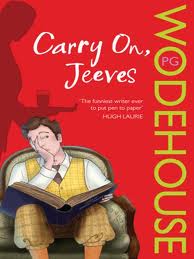
What Ho Jeeves!

Are you a P.G Wodehouse fan? I adore the quintessential English language, it tickles me immensely, how words were formed, their roots and original meanings, how language develops over the years and comes in waves of fashionable slang.
P.G Wodehouse.
Reading one of P.G Wodehouse's classic novels about gentleman Bertie Wooster and his gentleman's gentleman valet, the reliable Jeeves, makes me howl with laughter at a life past that I feel sure I once inhabited. The way that Wodehouse weaves the English language is too delightful to just read, one really needs to watch Stephen Fry and Hugh Laurie take a stab at the characters as well. They're a positive wheeze!
Wodehouse, known as Plum by his close family and friends, but born as Pelham Grenville Wodehouse, was born in Guildford, England in 1881. A chap from a bygone era who was a master at prose and the English language. A lot of his early life is reflected in the tales of Jeeves and Wooster, and I'll leave it to you to ponder whether it's a lot more of the Wooster than Jeeves or visa versa.
His characters names and settings are familiar areas around where we live, such as Lord Emsworth who has a penchant for pigs. In fact when I come to think of it most of his character's have a peculiar attachment to 'things' of varying kinds - Gussie Fink-Nottle has his newts, Bertie's uncle and his antique silver and there's something warming in his eccentric characters names with the likes of  Tuppy Glossop, Pongo Twistleton, Offy Prosser, Bingo Little, Watkyn Bassett and Galahad Threepwood dancing about the pages one can't help but smile whilst reading them.
I love the turn of phrase and precise language Jeeves uses when he quotes such utterings as, "Precisely so Sir, but Mrs Snap refuses to consider such a venture while Sir Roderick's daughter remains unmarried. In a colourful turn of phrase she stated that specific and scarcely to be anticipated  meteorological conditions would have to take place in the infernal region before she would share a home with Miss Honoria"...... Priceless!
The draw of his good natured characters is their mental silliness and willingness to get themselves into sticky situations, none more so than the lovable Bertie Wooster, who is always rescued by his loyal man Jeeves. Wodehouse created Jeeves as a character in 1915 and he has become the stereotypical  English valet or Butler type, even spawning an 'Ask Jeeves' Internet search engine.
The Infallible Jeeves.
Most of the plots are instigated by interfering female characters who seem to want to mould Wooster in some Mothering way, be they young and pretty, chap's sisters or his whole gaggle of aged aunts - Wooster is plagued by the women in his life whilst remaining determinedly single.
The loveable Bertie Wooster. 
I read the books because I love the era and feel surprisingly at home inside Wodehouse's pages. They're comforting as if I've missed the people and the bustle of a life gone by. One of the best things about Jeeves and Wooster though is watching the famous Fry and Laurie adaptations. The dry humour, the cars, the decor , the homes and furnishings and oh my the clothes, hats and shoes. It is delicious period eye candy to feast upon.
Lady Glossop.


    I wish I could step through the screen and land amongst them in a period frou frou of chiffon and lace.  Where hats were worn to match gloves and outfits were solely designed for afternoon tea and Tiffins.                                   

Monday, October 24, 2011

Are you a Robe, Gown or Peignoir Girl?

Now the weather has taken on a slight chill I have changed a vital piece of my wardrobe - my dressing gown - from silk to fleece.  This small act started me thinking about the humble dressing gown or robe as some call it. From whence did it originate?
The Medieval female  robe.
Well, according to the word root dictionary, the word robe comes from old English and literally means garment, but it's thought that it originated from the Frankish language (which is an extinct old West Germanic language) from the word 'rouba' . Scholars think this comes from the word 'to rob', meaning of gowns and clothing, because material was very expensive and time consuming to produce in the Middle Ages. Especially if it was of fine quality, it could be worth a lot. This word then has travelled down to our language of today to eventually mean a woman's dress or long wrap, hence the word dressing robe. The distinction of difference being that a robe had long sleeves, as opposed to being a cape or a cloak.

Pattern for 1920's Housecoat.
Over the years there have been many variants on the usage and words associated with robe. There's the dressing robe - which years ago meant a male garment or the dressing gown - a loose garment with a wrap belt worn when one is relaxing about the house usually in bedwear attire.
Then there's the humble bathrobe made of absorbent material to wear after a bath, and the housecoat - worn in the 1930's and becoming very popular in the 1940's. This was not worn for bed or relaxing, but generally about the house as the title suggests. Perhaps it's other commonly referred to name will give you a clue to it's usage, 'the duster' . Longer than an apron, but less coverage than a pinafore, the housecoat was worn to protect the lady of the house's beautiful dresses whilst she bustled about the house doing her daily chores. They were made from a variety of light fabrics and some were even quited for extra warmth. Woman it seems found them so comfy that they started wearing them in longer styles in the evenings for lounging around, making the fashion industry design more stylish numbers. This then is the pre-outfit to our modern dressing gown......but where did it originally originate from in history?
Nicolas Bylston in a green Banyan,
painted 1767.

An aged Sir Issacc Newton in a Banyan,
painted by James Thornhill 1709-12.
It seems that looking back over history the dressing gown or lounge robe, whatever you wish to call it has been with us since the early 17th Century in disguise with a rather peculiar name, the Banyan.
Vintage Male Banyan.
The Banyan originally only worn by men, of course, was a dressing robe - rather like an English Tudor styled nobles robe but with sleeves reaching to the knees and a heady mix from the Persian or Asian style clothes that had begun to influence society. The word Banyan means in Arabic and Portuguese - merchant.
With the Orientalist movement in Art it was only fitting that it moved over into fashion.The exotic oriental style had become the latest fascination for Europe and so the robe took on an exotic matching flavour becoming more flamboyant and resplendent in it's fabrics and colours. It was around this time that it started to become known in our English culture as a morning gown, or robe de chambre - nightgown, becoming a floor length gown and at last it took on the appearance that we feel familiar with today. The range of materials increased to include Indian and Chinese silks and bedtime chic was created in Europe.
Dressing robe for women.
But what of the women? When were we allowed to wear Banyans and nightgowns..........well of course we did but not as extravagant as our male peacocks, that didn't occur until the 18th Century I'm afraid with the introduction of the Japanese Kimono into Western thought.


1920's Kimono styled robe.


1930's Hollywood glamour in black.


Then of course in the 19th Century we had the delectably named Peignoir. What a delightful word, it just simply rolls of the tongue with ease and sophistication and a touch of naughtiness.......peignoir.

1930's robe.

With the Peignoir 'comfort' was the ultimate key word. A woman's comfort in those days was hardly ever thought of in clothing that was so very restrictive in every way shape and form, yet here was a delicate little number that allowed just that.....comfort so women could breathe away from the dreaded laced corset.
Usually made of lace and chiffon, it was light and airy to wear and felt cool against their skin. The word Peignoir comes from the French word 'peigner' to 'comb ones hair' from the Latin pectin/comb. Which is when woman brushed their hair the most - at night. Remember, one hundred stokes girls to make it shiny and lustrous.
Peignoirs were later sold as a whole set of gown, panties and stockings with which to wear to bed. I should think that that appeal alone was enough to men to make the Peignoir an instant hit as the number one saucy Christmas gift of the 19th Century! There is no other era that shows this better than the Hollywood glamour of the 1930's - 1940's with the movie stars and their black and white photography.
The male Banyan developed into the smoking jacket and then sadly both males and female attire seemed to mere into the androgenous terry toweling dressing gown that we see hung on shops rails today. I must say they're jolly comfortable not very glamorous or sexy - what's wrong with a little bit of sexy glamour?! Bring back the peignoir! Of course it's still around and the best places to find them apart from the high street lingerie shops are in the vintage boutiques. Perhaps a peignoir will be on your naughty Christmas list this year? I know it'll be on mine. ;)

Sunday, October 23, 2011

My Hero - The Wrap Dress.

A heroine among woman -
Diane Von Furstenberg.
Every woman needs at least one in her wardrobe. I have too many to count. It is the ultimate feel good, cinch in your waist, nip and tuck in all the right places, you look amazingly gorgeous in that dress - the world has ever known!
Brought to us by the lovely 'champion of the female curvy shape' Diane Von Furstenberg and known throughout the world for her iconic wrap dress. God bless the ground she walks upon!
A Belgian - American fashion designer who married a German Prince, some time judge on Project Runway and designer of the iconic jersey knit wrap dress in 1972. Yes, just like me next year the wrap will be forty! I am hoping they will bring out some celebratory 'wrap dress' designs for it's fortieth birthday. You can never have too many wraps,...... never. I for one aim to celebrate our birthday by wearing one.

Vintage 1972 Wrap Dress.
Bursting on to the Seventies market in a flood of bright bold prints, new stretchy durable material that fits oh so snugly and is just too comfortable to be allowed by law. The Wrap Dress soon became a woman's popular choice to wear, knowing it gave and fitted in all the right places. Giving a flattering, yet supportive silhouette. The magic of the wrap dress is that it suits a variety of figures and shapes and for each one it gives perfection. Simple, chic, stylish and comfort - all in one package. A miracle in fabric that can come in a variety of cuts and styles. It can have long sleeves, three quarter, short, capped, or none. It can be tie or faux wrap, tunic, maxi, midi or mini, ruffled, polka dot, plain or full on pattern. It can be in any fabric for any season, for any occasion. It can be demure, sexy, smart, casual, sassy, classic, string, feminine, mummsie or blousy. You can dress it up, you can dress it down. Wear it on it's own or with jeans. It goes with any shoe or boot. It is the world's wonderall dress. If ever there was a super hero of clothing - The Wrap Dress is it!


At last a dress for a real woman designed by a woman. x

Tuesday, October 18, 2011

Secret Letters.

Yesterday, I didn't feel too good and decided to ensconce myself on the sofa in the evening, cuddling a cushion and watching a programme I had saved for myself on the planner. Entitled Secret Letters, it was about the most recent discovery in a family members loft of several suitcases full of the authenticated letters and correspondence of Wallis Simpson. A secret that has been kept until the last of them went to their graves and promised to keep hidden until the true story could be told.
'David'.
As I am enraptured by history, and especially this period. Long have I drooled over some of Walli's clothes and flawless style. I of course know the story of Wallis and Simpson - who doesn't! The woman who got her man. Love story of the Twentieth Century. The scarlet harlot of a twice divorced woman who lured the dashing bachelor future King V111 away from his duty and the throne of England - Scandal galore!!!
But you see, what many people don't realize is that history changes. It is not dead and in the past. It is alive and vibrant and changing all the time, as historians and archaeologists discover and understand new things. Evidence that will change our points of view is surfacing all the time. Usually only the victors got to write history, but remember there are always two sides to every story.
Wallis Simpson.
Only from Wallis' own pen can we see this other side to the tale - it seems no one really knew the real true story except perhaps three close people. Wallis didn't love Edward - or David as she and the Royal family called him. In her frank and open letters between her aunt Bessie and current husband Ernest Simpson it seems that she and Ernest played a very dangerous social climbing game. Just the same as the modern film Indecent Proposal, with Demi Moore and Robert Redford - where the man offers one million pounds for one night with Woody Harelson's wife. Things went wrong. The human heart is not to be tampered with.
It seems in order to climb the social ranks Ernest and Wallis set out to 'have fun and climb ranks', by allowing her to become one of the Prince's mistresses, of course with Ernest's blessing and understanding - as was the protocol at the time. This was normal practice in their society. Still happens today - look at Camilla and Charles. They all thought Edward would tire of Wallis, like he had every other woman. He didn't, instead he fell in love. A deep, needing and controlling love. She tried to leave, tried to end it - even writing to the British Government and Prime Minister Stanley Baldwin, to beg them not to allow him to abdicate, because she knew once he did her fate would be forever sealed.
Edward was never letting Wallis go, and she would loose all the society points if she caused a scandal. Ernest and her would be ruined the world over. She tried everything she could to remove herself from the situation, but she had realised the enormity of her fate too late. The newly crowned  King even told his family, Wallis, Ernest and his ministers - that if he lost Wallis he would slit his own throat! There was to be no escape for Wallis and Ernest. They had little choice but to comply with the Royal pressure. Ernest agreed to grant a divorce and be seen with his mistress, which was now agreeing to an illegal contract. After begging him to remain King, Wallis listened to Edward's abdication speech in tears and realized it was the lid coming down on her coffin, once he spoke those famous words :

" But you must believe me when I tell you that I have found it impossible to carry the heavy burden of responsibility and to discharge my duties as King as I would wish to do without the help and support of the woman I love". - King Edward V111.

 
 For two years after her marriage to Edward, Wallis wrote her feelings and love to ex husband, Ernest, whom she had realised too little too late - she really truly loved. He wrote to her imploring her to always keep a fan flaming for their love. Their cold and calculating social gamble had gone horribly wrong. They had played with fire and got their fingers irreparably burnt.